Honoring Black History Month 

This month, we amplify the voices of men and women whose faith and leadership have shaped the church and the world around them. We invite you to return each week as we share a new story—celebrating the faith, courage, and legacy that continue to shape us today.

The Memphis Miracle

Thirty years ago, Black and white Pentecostal leaders gathered in Memphis for what became known as the “Memphis Miracle” — a historic step toward racial reconciliation.
On Oct. 18, 1994, leaders dissolved the predominantly white Pentecostal Fellowship of North America (PFNA). The next day, they formed the Pentecostal and Charismatic Churches of North America (PCCNA), a new organization intentionally built on diverse representation from the start. More than 3,000 people attended the three-day gathering, marked by honest confession, repentance, worship, and visible acts of humility.
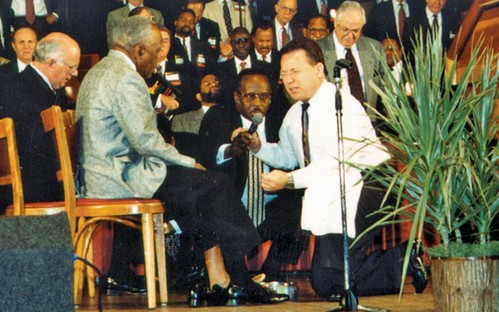
One of the most powerful moments came when Donald Evans, an Assemblies of God pastor, approached the platform in tears. Sensing God’s leading, he publicly repented for historical racial discrimination and washed the feet of Ithiel Clemmons, a bishop in the Church of God in Christ. Many in the room wept, recognizing the moment as a profound step toward healing.
The Memphis Miracle became a turning point, leading to meaningful changes in leadership representation and a renewed commitment to racial unity across Pentecostal fellowships.
Read the full article to explore the story, its lasting impact, and the lessons it offers the Church today.

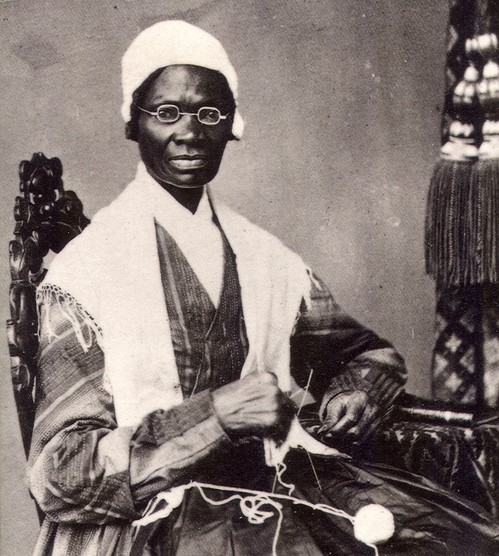
Sojourner Truth

Born into slavery in 1797 in New York as Isabella Baumfree, Sojourner Truth endured hardship and injustice from an early age. In 1826, she escaped to freedom with her infant daughter, trusting that God was leading her. Shortly after, she did something extraordinary for her time: she went to court to recover her young son who had been illegally sold—and she won. She became one of the first Black women in American history to successfully challenge a white man in court.
In 1843, after a profound spiritual experience, she changed her name to Sojourner Truth. She believed God had called her to travel throughout the country, speaking truth about slavery, injustice, and the dignity of all people. Though she never learned to read or write, her words carried power and authority. Her deep Christian faith shaped her message, and she boldly proclaimed that freedom and equality were not just political issues, but moral and spiritual ones.

In 1851, she delivered her now-famous speech, often remembered by the line, “Ain’t I a Woman?” In it, she challenged both racism and sexism, confronting a culture that denied the full humanity of Black women. With clarity and courage, she reminded listeners that strength, intelligence, faith, and dignity are not limited by race or gender.
During the Civil War, Sojourner Truth recruited Black soldiers for the Union Army and later advocated for land and resources for formerly enslaved people. She spent her life traveling, speaking, and advocating for justice—often facing hostility and danger—but she never stopped trusting the call God had placed on her life.
Sojourner Truth’s story reminds us that faith is not passive. It speaks. It acts. It stands firm in the face of injustice. Her life challenges us to consider how we, too, might courageously live out truth in our generation.

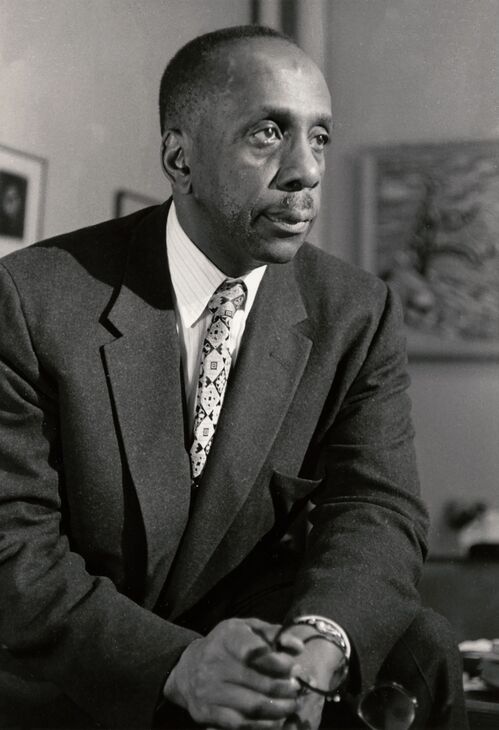
Howard Thurman

Howard Thurman, an author, theologian, educator, and civil rights leader who believed deeply in the power of faith to bring people together across differences.
In 1944, Thurman co-founded The Church for the Fellowship of All Peoples in San Francisco, California—the first fully integrated, multi-cultural church in the United States. At a time when segregation was the norm, this church stood as a revolutionary witness to what the Body of Christ could be.
Founded on the belief that people of every ethnic background could gather around a shared faith in God, the Church for the Fellowship of All Peoples became a living expression of reconciliation, unity, and peace. Thurman believed the Church was called not only to worship together, but to work together for justice and human dignity.

Beyond founding a revolutionary church, Howard Thurman was a theologian whose writings shaped generations of Christian leaders. His work emphasized a faith rooted in prayer, inner transformation, and courageous love in the face of injustice. He believed the Church should be a living witness to God’s reconciling presence in the world—forming communities where unity, dignity, and peace were not merely ideals, but lived realities.
His life and ministry consistently pointed toward a faith that was both deeply spiritual and courageously public. Thurman once wrote, “Do not be silent; there is no limit to the power that may be released through you.”
As we reflect on his legacy today, Thurman’s vision continues to challenge the Church to embody a faith that transcends division and bears witness to God’s reconciling love.

Thurman Faison

Yet the headlines from 2026 reflect the same themes that he referenced in his time: demonstrations, riots, class struggles, and corruption in the big cities. Fifty-five years have passed, but many of the same social ills remain.
Faison realized that social problems, ultimately, can only be solved with the gospel. He wrote: “The biggest issues will always be constant — the problem of sin in the human heart, the alienation of men from God, and the expressions of unrighteousness in word, thought, and deed.”
Click the button below to read more about Pastor Thurman Faison and to read his original speech.
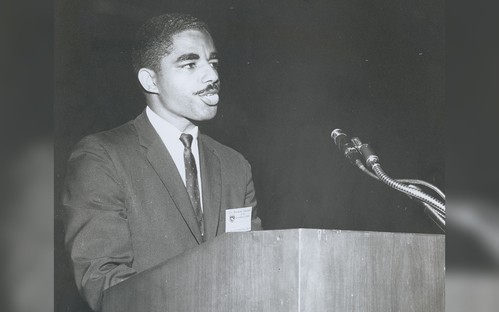
Riots and civil unrest marked American cities during the late 1960s and early 1970s.  When African-American Assemblies of God minister Thurman Faison addressed the 1971 meeting of the Pentecostal Fellowship of North America, he spoke to the social turbulence that was on everyone’s mind.
Faison’s message addressed the question “What are we going to do about our cities?”
At a time marked by unrest, division, and injustice, Faison made the point to his largely white audience that “all unrighteousness is sin — be it prejudice or adultery — and that the righteous Lord loves righteousness.”
In 1971, Faison stated that “the issues of yesterday are not the same today, nor will they be the same tomorrow.”